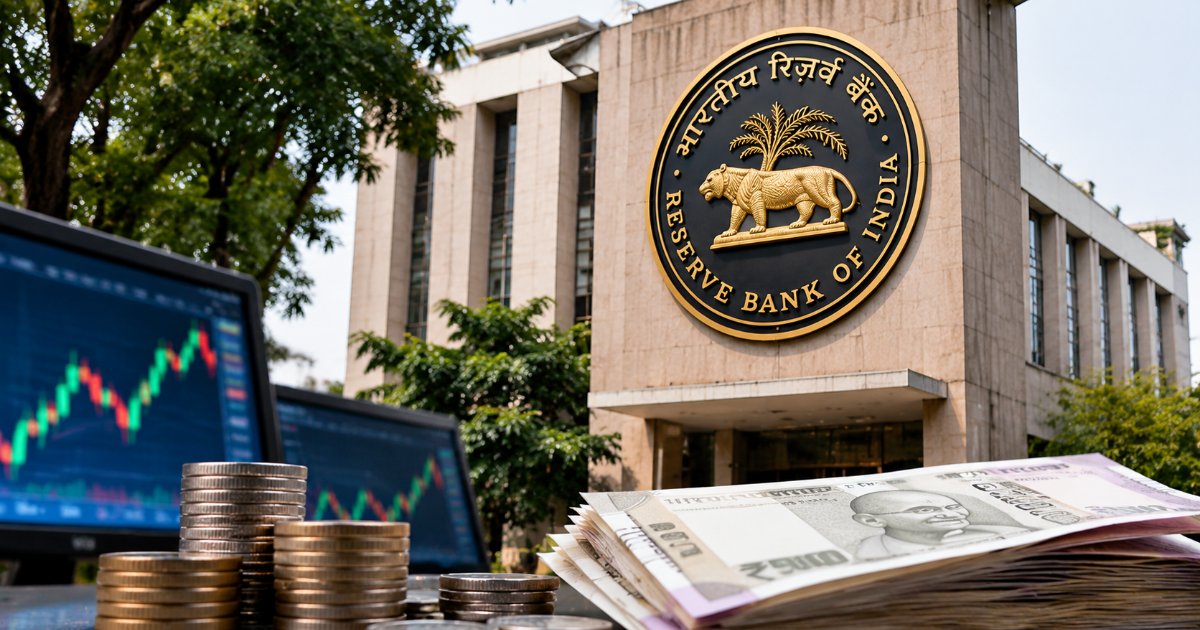
New Delhi, November 17, 2026: The Reserve Bank of India (RBI) may raise its benchmark repo rate again in December as inflation has moved above the central bank’s upper tolerance limit. Economists expect further monetary tightening, although estimates differ on the size and pace.
Inflation Crosses the 6% Mark
Retail inflation, measured by the Consumer Price Index (CPI), rose to 6.09 per cent in October, compared with 5.54 per cent in September. This took inflation above the RBI’s 6 per cent upper tolerance limit for the first time in two years. Food prices were a major contributor, with food inflation accelerating to 8.94 per cent from 7.74 per cent in September.
“Higher food costs can pressure household budgets and influence inflation expectations. The RBI’s medium-term target is 4 per cent, with a tolerance band of 2 to…”
Economists Expect Further Hikes
A Business Standard report said economists expect another 50 to 75 basis points of repo rate increases over the current tightening cycle, potentially taking the terminal rate to 6 to 6.25 per cent. One basis point is one-hundredth of a percentage point.
J.P. Morgan’s chief India economist Sajjid Chinoy has revised his estimate of the terminal repo rate to 6.25 per cent, from 5.75 per cent, citing persistent inflation. His baseline view includes 25-basis-point increases at the December, February and April policy meetings. He has also flagged a possibility of a 50-basis-point move in December if inflation risks intensify.
Barclays expects a 25-basis-point increase in December, followed by another 25-basis-point hike in February 2027, taking the repo rate to 6 per cent. The Economic Times reported that market participants see a 25-basis-point move as likely, while a 50-basis-point increase cannot be ruled out.
December Policy Meeting in Focus
The RBI’s six-member Monetary Policy Committee is scheduled to meet from December 2 to 4. The panel will assess price trends, food inflation, global energy prices, currency conditions and growth before deciding on the policy rate.
Higher repo rates increase banks’ borrowing costs and can make loans linked to external benchmarks more expensive for households and businesses. They can encourage saving and moderate demand, supporting efforts to control inflation.
However, tighter monetary policy can weigh on consumption, investment and growth. The RBI will have to balance price stability with sustaining economic activity. Its December decision will be closely watched by borrowers, investors and financial markets.