
Amid rising tensions in West Asia and growing instability in global energy markets, Russia has stepped forward with an offer to significantly increase its supply of crude oil and liquefied natural gas (LNG) to India. The move comes as both nations seek to strengthen their strategic and economic partnership in the face of global uncertainties.
The ongoing West Asia crisis has disrupted global energy supply chains, particularly due to concerns surrounding the Strait of Hormuz—a critical maritime route through which nearly 20% of the world’s oil and LNG supplies pass. Recent developments, including Iran’s effective blockage of the strait, have intensified fears of supply shortages and caused a sharp rise in global oil and gas prices.
In this context, Russia’s offer is seen as a crucial step toward ensuring India’s energy security. During high-level meetings held in New Delhi, Russia’s First Deputy Prime Minister Denis Manturov assured Indian leaders that Russian companies are fully capable of increasing their exports of crude oil and LNG to meet India’s growing energy demands.
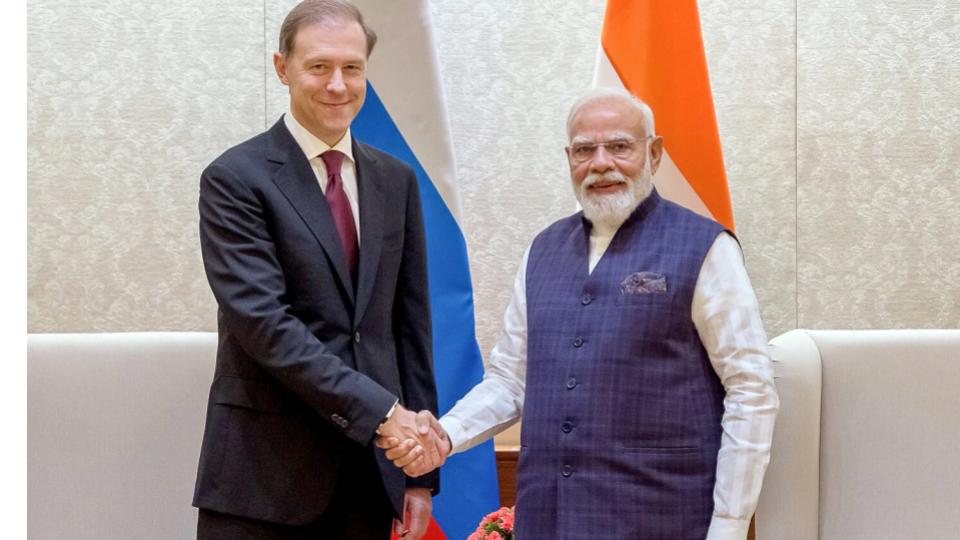
Manturov held extensive discussions with key Indian officials, including National Security Advisor Ajit Doval, External Affairs Minister S. Jaishankar, and Finance Minister Nirmala Sitharaman. He also met Prime Minister Narendra Modi, highlighting the importance both nations place on deepening bilateral cooperation.
According to official statements, energy cooperation emerged as a central theme in these discussions. Russia emphasized its readiness to act as a reliable energy partner for India, especially at a time when traditional supply routes are under stress. A Russian readout noted that “special attention was given to cooperation in the oil and gas sector,” and reaffirmed Russia’s ability to steadily increase supplies to the Indian market.
India, which relies heavily on imports to meet its energy needs, has historically sourced a significant portion of its crude oil from West Asia. However, the current geopolitical instability in the region has forced policymakers to diversify supply sources and strengthen ties with alternative partners like Russia.
Beyond energy, the talks also covered a wide range of bilateral issues under the framework of the India-Russia Inter-Governmental Commission on Trade, Economic, Scientific, Technological, and Cultural Cooperation (IRIGC-TEC). The meeting, co-chaired by Denis Manturov and S. Jaishankar, focused on expanding trade, boosting investments, and enhancing industrial cooperation.
Both sides discussed specific measures to create favorable conditions for increasing bilateral trade, especially in the current global scenario. Russia highlighted its growing role in supplying fertilizers to India, noting a 40% increase in exports by the end of 2025. Moscow expressed its willingness to continue meeting India’s agricultural needs in this sector.
The Ministry of External Affairs (MEA) stated that discussions also explored new opportunities in technology, innovation, connectivity, and critical minerals. The two nations reviewed progress made since the 23rd India-Russia Annual Summit held in December last year, where several key agreements were signed.
During that summit, Prime Minister Narendra Modi and Russian President Vladimir Putin outlined an ambitious roadmap to elevate bilateral trade to USD 100 billion annually by 2030. This target reflects the growing depth of economic ties between the two countries and their shared commitment to long-term cooperation.
In addition to trade and energy, the talks also touched upon civil nuclear energy collaboration, with Russia expressing strong interest in expanding its engagement in this field. Such cooperation could play a significant role in supporting India’s long-term energy transition goals.
The leaders also exchanged views on regional and global developments, particularly the evolving situation in West Asia. The crisis has underscored the vulnerability of global energy markets and highlighted the importance of diversified and resilient supply chains.
Russia’s offer to boost energy supplies to India is not just a commercial move but also a strategic one. It reflects Moscow’s intent to strengthen its position as a key energy partner for India, while also helping New Delhi navigate the challenges posed by geopolitical disruptions.
As the West Asia crisis continues to unfold, India’s ability to secure stable and affordable energy supplies will remain a top priority. Strengthening ties with Russia could prove to be a vital component of this strategy, ensuring that the country’s economic growth remains on track despite global uncertainties.